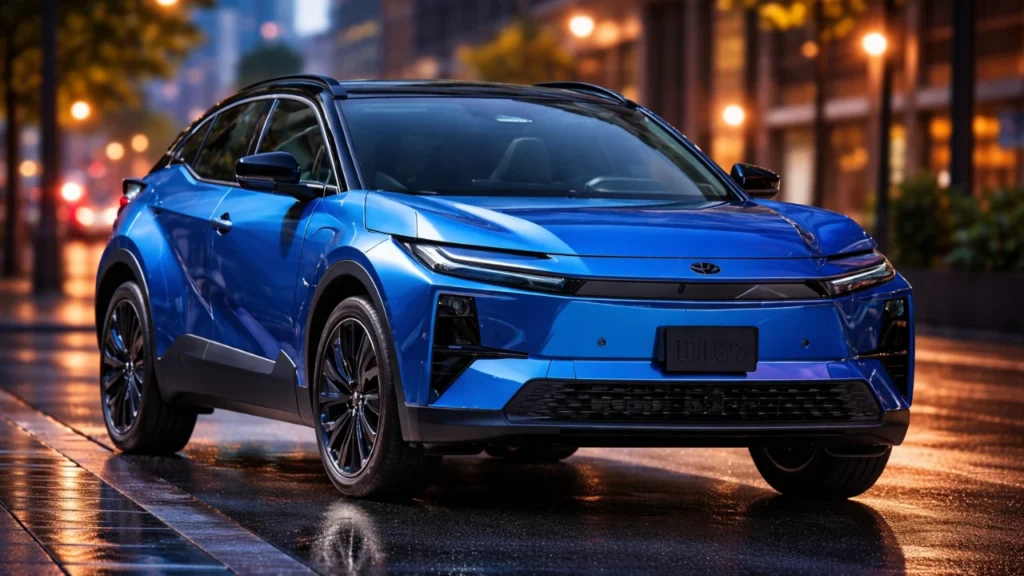
The 2026 Toyota C-HR marks a dramatic transformation for Toyota’s compact crossover. Once known as a quirky gasoline-powered SUV, the C-HR now returns as a fully electric compact SUV, built to compete in the rapidly growing EV market. With standard all-wheel drive, strong acceleration, and modern tech, the Toyota C-HR EV is aiming to attract drivers who want style, practicality, and electric performance in one package.
But does it truly deliver on the promise? Here’s a deep dive into what the new Toyota C-HR 2026 brings to the table.
A Fresh Identity: From Hybrid Roots to Full EV
Toyota has repositioned the C-HR as an electric-only model in several key markets. Instead of incremental updates, the brand rebuilt it on a dedicated EV platform. This shift allows for better battery placement, improved cabin space efficiency, and stronger overall performance.
The result is a compact electric SUV that feels purpose-built rather than converted from a gas-powered design.
Performance & Powertrain: Quick Off the Line
The 2026 Toyota C-HR EV comes standard with a dual-motor all-wheel-drive system, delivering impressive horsepower for its class. Acceleration is brisk, with 0–60 mph times around the five-second mark, placing it among the quicker compact electric SUVs.
Driving impressions highlight:
-
Instant torque delivery
-
Confident highway merging
-
Smooth and controlled power output
-
Balanced ride comfort
While it’s not tuned as a performance SUV, the C-HR offers engaging daily driving dynamics.
Battery, Range & Charging
Range is one of the most important factors for EV buyers. The Toyota C-HR electric model offers an estimated range close to 280–290 miles depending on trim and wheel size.
Charging capabilities include:
-
Fast DC charging support
-
Compatibility with major public charging networks
-
Improved thermal battery management
For urban commuters and small families, this range comfortably supports daily driving without constant charging anxiety.
Interior & Technology
Step inside, and the new Toyota C-HR feels modern and refined. The cabin features a large touchscreen infotainment system, digital driver display, and intuitive controls.
Highlights include:
-
14-inch central touchscreen
-
Wireless smartphone integration
-
Advanced driver assistance features
-
Premium trim materials on higher variants
Rear space is adequate for a compact SUV, though taller passengers may notice slightly tighter legroom compared to larger crossovers.
Practicality & Cargo Space
Toyota has optimized interior packaging thanks to its EV architecture. The cargo area remains competitive in the compact electric SUV segment, and folding rear seats increase flexibility.
For buyers comparing the Toyota C-HR vs other compact EVs, practicality remains a strong point.

Key Specifications Overview
| Feature | 2026 Toyota C-HR EV |
|---|---|
| Powertrain | Dual Motor AWD |
| Estimated Power | ~338 hp |
| 0–60 mph | ~4.9 seconds |
| Battery Capacity | Approx. 74 kWh |
| Estimated Range | ~287 miles |
| Charging | Fast DC charging supported |
| Infotainment | 14-inch touchscreen |
| Segment | Compact Electric SUV |
Design: Sporty Yet Sophisticated
The exterior design keeps the bold C-HR personality intact but refines it with sharper lines and aerodynamic enhancements. Slim LED headlights, sculpted body panels, and a coupe-inspired silhouette make it stand out in crowded parking lots.
Toyota has managed to preserve the model’s distinctive identity while modernizing its appeal.
Safety & Driver Assistance
Toyota’s reputation for safety continues with the 2026 C-HR. Standard features include:
-
Adaptive cruise control
-
Lane-keeping assist
-
Blind-spot monitoring
-
Emergency braking systems
These systems make the vehicle well-suited for both city commuting and highway travel.
Market Position & Competition
The compact EV crossover market is highly competitive. The Toyota C-HR competes with models such as the Kia EV6, Volkswagen ID.4, and other electric SUVs in a similar price range.
Where it stands out:
-
Standard AWD configuration
-
Strong acceleration
-
Toyota’s reliability reputation
-
Clean, user-friendly interior design
For buyers searching for the best compact electric SUV 2026, the C-HR deserves serious consideration.
Final Verdict
The 2026 Toyota C-HR represents a confident leap into the electric future. It blends performance, modern technology, and practical design in a compact footprint.
While it may not lead the segment in absolute range or sport-focused handling, it offers a well-rounded package that aligns with everyday driving needs.
For those considering an affordable electric SUV with strong features and Toyota’s reliability backing it, the new C-HR makes a compelling case.
FAQs
1. Is the 2026 Toyota C-HR fully electric?
Yes, the latest version is offered as a fully electric SUV in several markets.
2. What is the range of the Toyota C-HR EV?
It offers an estimated range of approximately 280–290 miles depending on configuration.
3. Does the Toyota C-HR come with AWD?
Yes, dual-motor all-wheel drive is standard in many versions.
4. How fast is the 2026 C-HR?
It can accelerate from 0–60 mph in under five seconds.
5. Is the Toyota C-HR good for families?
It works well for small families, offering adequate interior space and strong safety features.