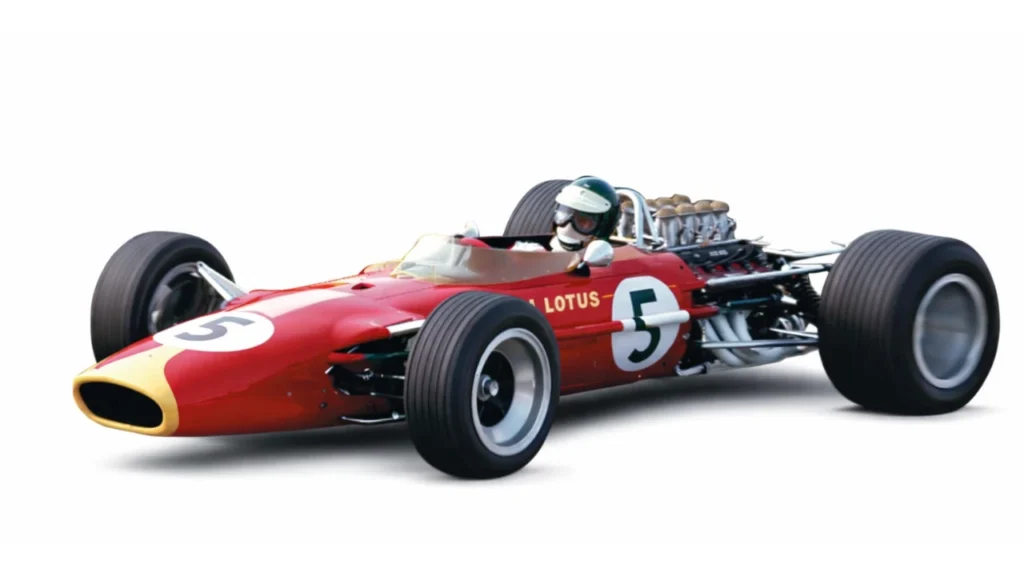
Formula 1 has seen many powerful engines throughout its history, but only a few have truly changed the sport. One of those revolutionary engines is the Ford Cosworth DFV. Introduced in the late 1960s, this engine reshaped Formula 1 racing by making high-performance technology accessible to multiple teams.
For many motorsport fans, the Cosworth DFV V8 engine is still considered the most successful engine in Formula 1 history. It powered dozens of cars, dominated races for years, and helped smaller teams compete with major manufacturers.
In this article, we will explore the history, specifications, achievements, and lasting impact of the Ford Cosworth DFV engine and why it remains a legendary part of Formula 1.

The Origin of the Ford Cosworth DFV Engine
During the 1960s, Formula 1 teams were looking for a powerful yet reliable engine that could compete with dominant manufacturers like Ferrari and BRM. British engineering company Cosworth, founded by Keith Duckworth and Mike Costin, partnered with Ford Motor Company to develop a new racing engine.
Ford provided the funding, while Cosworth handled the engineering and design. The result was the Cosworth DFV (Double Four Valve) engine — a revolutionary 3.0-liter V8 Formula 1 engine designed specifically for the new F1 regulations introduced in 1966.
The engine made its debut in 1967 at the Dutch Grand Prix, installed in the Lotus 49 driven by legendary driver Jim Clark. In an incredible start, the car won the race on its debut, immediately proving the potential of the engine.
What Does DFV Mean?
The name DFV stands for Double Four Valve.
This refers to the engine’s advanced design:
- Four valves per cylinder
- Double overhead camshafts
- V8 configuration
This design allowed the engine to produce high power while maintaining reliability, something many competitors struggled to achieve at the time.
Why the Cosworth DFV Was Revolutionary
The Cosworth DFV did more than just produce power. It introduced a new engineering philosophy in Formula 1.
Engine as a Structural Component
Instead of being mounted inside a full chassis, the DFV engine was designed to act as a stressed structural member of the car. This meant the engine connected directly between the cockpit and rear suspension.
This approach reduced weight and increased rigidity, improving the car’s handling and performance.
Affordable Performance for Smaller Teams
Before the DFV, most teams depended on exclusive engine deals with major manufacturers. The Cosworth DFV changed that by being available to multiple teams.
This allowed smaller teams to compete with giants like Ferrari, dramatically increasing competition in Formula 1.
Ford Cosworth DFV Engine Specifications
Below is a quick overview of the main specifications of the legendary Ford Cosworth DFV engine.
| Specification | Details |
|---|---|
| Engine Type | Naturally Aspirated V8 |
| Engine Capacity | 3.0 Liters |
| Configuration | 90° V8 |
| Valves | 4 Valves Per Cylinder |
| Power Output | Around 400–500 HP (depending on version) |
| Debut Race | 1967 Dutch Grand Prix |
| First Car | Lotus 49 |
| Total F1 Wins | 155 Grand Prix victories |
| Active Years | 1967 – 1985 |
| Championships Won | 12 Drivers’ Titles, 10 Constructors’ Titles |
Dominance in Formula 1 Racing
The Cosworth DFV quickly became the most dominant Formula 1 engine of its era.
Between the late 1960s and early 1980s, the DFV powered a large number of Formula 1 teams. Because the engine was both powerful and reliable, many teams adopted it.
Some of the most famous teams that used the DFV include:
- Lotus
- McLaren
- Williams
- Tyrrell
- Brabham
- Ligier
- Penske
At certain points in Formula 1 history, almost the entire grid was powered by the Cosworth DFV engine.
Record-Breaking Achievements
The DFV engine holds some incredible records in Formula 1.

155 Formula 1 Race Wins
No other engine dominated for such a long period. The DFV achieved 155 Grand Prix victories, making it one of the most successful engines in motorsport history.
Multiple Championships
Cars powered by the DFV engine won:
- 12 Drivers’ Championships
- 10 Constructors’ Championships
These titles were achieved with several different teams, proving the versatility of the engine.
Years of Competitive Performance
Even as technology advanced, the DFV remained competitive for almost two decades, which is extremely rare in Formula 1.
Famous Cars Powered by the Cosworth DFV
Several legendary Formula 1 cars used the DFV engine and became icons of motorsport history.
Lotus 49
The Lotus 49 was the first car to use the DFV engine. It introduced the revolutionary design where the engine acted as a structural component.
McLaren M23
This car helped McLaren achieve major success during the 1970s and became one of the most recognizable Formula 1 cars.
Williams FW07
The Williams FW07 dominated races in the late 1970s and early 1980s using the Cosworth DFV engine.
The End of DFV Dominance
By the early 1980s, Formula 1 technology began to change rapidly. Manufacturers introduced turbocharged engines, which produced significantly more power than naturally aspirated engines like the DFV.
Although the Cosworth DFV continued to compete for several years, turbo engines eventually took over the sport.
The engine’s final Formula 1 victory came at the 1983 Detroit Grand Prix.
The Legacy of the Ford Cosworth DFV
Even decades later, the Cosworth DFV remains one of the most respected engines in motorsport history.
Its impact includes:
- Revolutionizing Formula 1 car design
- Making competitive engines accessible to smaller teams
- Helping create one of the most competitive eras in F1 history
Many engineers and racing experts still consider the DFV the greatest Formula 1 engine ever built.
Today, the sound and performance of the Cosworth DFV V8 continue to inspire motorsport fans and collectors around the world.
Final Thoughts
The Ford Cosworth DFV engine was more than just a racing engine — it was a technological breakthrough that reshaped Formula 1. With its powerful V8 design, innovative engineering, and unmatched success, it became the backbone of Formula 1 for nearly two decades.
From its first victory in 1967 to its final win in the 1980s, the DFV proved that brilliant engineering and smart design can transform an entire sport.
Even in modern Formula 1 discussions, the Cosworth DFV remains a benchmark for performance, reliability, and racing heritage.